Clogged Gutters in Houston: Risks & Damage Explained
How Much Damage Can Clogged Gutters Cause to a Houston Home?
Clogged gutters can cause significant damage to a Houston home by forcing rainwater onto the roof, siding, landscaping, and soil around the foundation instead of safely directing it away. Over time, poor gutter drainage can contribute to roof deterioration, moisture intrusion, mold-friendly conditions, pest activity, soil erosion, and costly repairs. Houston’s frequent heavy rainfall makes keeping gutters clear especially important.
At Sunny Pressure Washing, we understand that gutter cleaning is about much more than improving curb appeal. Your gutter system is part of your home’s water-management system, and when it cannot function properly, water can end up where it does not belong. Our team helps Houston-area property owners remove accumulated leaves, twigs, dirt, and other debris so gutters can drain effectively. With professional service, careful attention to the property, and a customer-focused approach, Sunny Pressure Washing makes an often-overlooked maintenance task easier to manage.
Why Gutter Cleaning in Houston Helps Protect Your Home From Water Damage
Houston’s climate puts gutters to work throughout the year. According to the National Weather Service, Houston’s 1991-2020 climate normals at George Bush Intercontinental Airport include approximately 51.84 inches of precipitation annually. June alone averages about 6 inches.
That amount of rainfall means a clogged gutter can become a problem quickly. Gutters are designed to collect runoff from the roof and carry it toward downspouts. When leaves, roof granules, twigs, seed pods, and other debris block that path, water may overflow or back up.
What Happens When Your Gutters Are Clogged?
The immediate problem is that rainwater loses its intended drainage path. Instead of moving through the gutter and downspout, water can spill over the sides, pool in sections of the gutter, or remain close to the roofline.
Possible consequences include:
- Water overflowing near the foundation
- Soil erosion around the home
- Staining on siding, fascia, or exterior surfaces
- Standing water in gutters
- Excess moisture around roof edges and wood components
- Damaged landscaping beneath overflowing gutters
- Increased opportunities for mosquitoes and other pests
- Additional stress on gutters from heavy, wet debris
The U.S. Environmental Protection Agency recommends keeping gutters and downspouts free of debris and leaks and directing downspouts away from the house during periods of heavy rain.
In other words, clean gutters are not simply cosmetic. They help control where rainwater goes.
Can Clogged Gutters Cause Foundation Problems?
Clogged gutters can contribute to moisture problems around a home’s foundation when overflowing water repeatedly saturates the surrounding soil. Proper drainage helps move roof runoff away rather than allowing it to collect next to the structure.
The EPA’s moisture-control guidance notes that foundations can be vulnerable to chronic moisture problems from rainwater and recommends checking whether the surrounding landscape diverts water away from the building.
For Houston homeowners, this is especially relevant because substantial rainfall can send a large volume of water across a roof during a storm.
Gutters cannot solve every drainage or foundation issue, but keeping them clear removes one preventable source of poor water management. Homeowners should also make sure downspouts discharge appropriately and that the surrounding grade carries water away from the structure.
Do Clogged Gutters Attract Mosquitoes and Other Pests?
Yes, clogged gutters can create conditions that are attractive to pests, particularly when debris traps standing water.
The EPA specifically advises property managers to keep gutters clean and unclogged because standing water and debris can provide water for pests including mosquitoes, carpenter ants, rodents, and others. The agency also recommends eliminating standing water in rain gutters as part of mosquito and pest prevention.
A gutter packed with damp organic material can offer pests two things they frequently seek: moisture and shelter.
Keeping gutters flowing freely helps reduce these conditions. This can be especially useful during Houston’s warm, humid months, when homeowners already have plenty of reasons to manage standing water around their properties.
Can Clogged Gutters Lead to Mold or Moisture Damage?
Clogged gutters can contribute to moisture conditions that increase the risk of water-related deterioration and mold growth if water reaches vulnerable building materials.
The EPA identifies moisture control as the key to controlling mold and specifically recommends cleaning and repairing roof gutters regularly. It also advises correcting drainage conditions that allow water to enter or collect around a building’s foundation.
Warning signs homeowners should not ignore include:
- Water marks beneath the gutters
- Peeling or deteriorating exterior finishes
- Damp fascia or wood near the roofline
- Gutters overflowing during ordinary rainfall
- Water pooling near the foundation
- Persistent musty odors inside the home
- Visible plant growth or thick organic debris in gutters
These symptoms do not automatically mean major damage has occurred, but they are good reasons to investigate the gutter and drainage system.
How Often Should Houston Homeowners Check Their Gutters?
Houston homeowners should inspect their gutters regularly and after major storms, rather than waiting until water begins overflowing. The ideal cleaning schedule depends on the property.
Gutters may need attention more frequently when:
- Large trees overhang the roof
- Pine needles, leaves, or seed pods accumulate quickly
- Birds or pests leave nesting material behind
- Recent storms have deposited debris
- Downspouts clog repeatedly
- Water spills over the gutter during rain
A useful habit is to observe the gutter system during or immediately after a moderate rainstorm from a safe location on the ground. Water pouring over an edge or failing to exit a downspout can indicate a blockage.
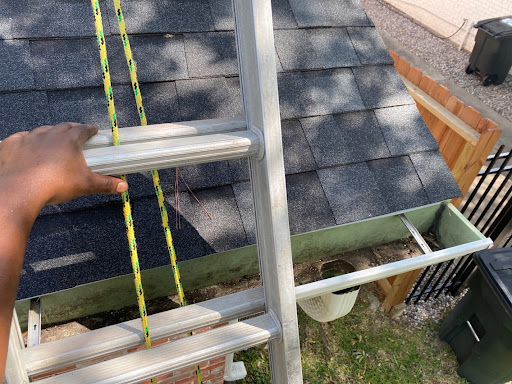
Do not climb onto a wet roof or take unnecessary ladder risks to investigate a clog. Professional gutter cleaning can be a safer and more convenient option, particularly on multi-story homes or difficult rooflines.
Why Preventive Gutter Maintenance Is Worth It
Cleaning gutters before they become completely blocked is generally easier than addressing water damage after drainage has failed.
Routine gutter maintenance supports several parts of your property at once. It helps keep roof runoff moving in the intended direction, reduces standing water, protects landscaping from concentrated overflow, and gives homeowners an opportunity to notice drainage problems before another Houston downpour arrives.
The EPA recommends regular gutter cleaning as part of moisture prevention and proper drainage around buildings.
For Houston homeowners, that makes gutter cleaning a practical part of routine exterior maintenance rather than an optional cosmetic service.
Frequently Asked Questions About Clogged Gutters
What is the biggest problem caused by clogged gutters?
The primary problem is uncontrolled rainwater. When gutters cannot drain properly, water can overflow near the roof, siding, landscaping, and foundation instead of being carried safely away from the home.
Can standing water in gutters attract mosquitoes?
Yes. The EPA recommends eliminating standing water in rain gutters because mosquitoes can use standing water for breeding.
How can I tell if my gutters are clogged?
Common signs include overflowing water, sagging sections, visible debris, staining beneath the gutter, water pooling near the home, and little or no water coming from a downspout during rainfall.
Should gutters be checked after a major Houston storm?
Yes. Storms can deposit leaves, branches, and other debris onto roofs and into gutters. Checking the system from the ground after severe weather can help identify obvious drainage problems before the next heavy rainfall.
Protect Your Houston Home With Sunny Pressure Washing
Clogged gutters may look like a minor maintenance issue, but the water they fail to control can affect multiple areas of your property. In a rain-prone climate like Houston’s, keeping roof drainage systems clear is a straightforward way to support your home’s long-term maintenance.
Ready to clear your gutters and help keep rainwater moving where it belongs? Contact Sunny Pressure Washing today to schedule professional gutter cleaning in Houston, TX.