
Can You Pressure Wash a Brick House in Houston, TX?
Yes, you can pressure wash many brick houses in Houston, TX, but the cleaning method must match the condition and type of brick and mortar. Excessive pressure or improper technique can permanently damage brick surfaces, weaken mortar joints, or force water into the wall. For many homes, professional low-pressure washing with an appropriate cleaning solution is the safer approach.
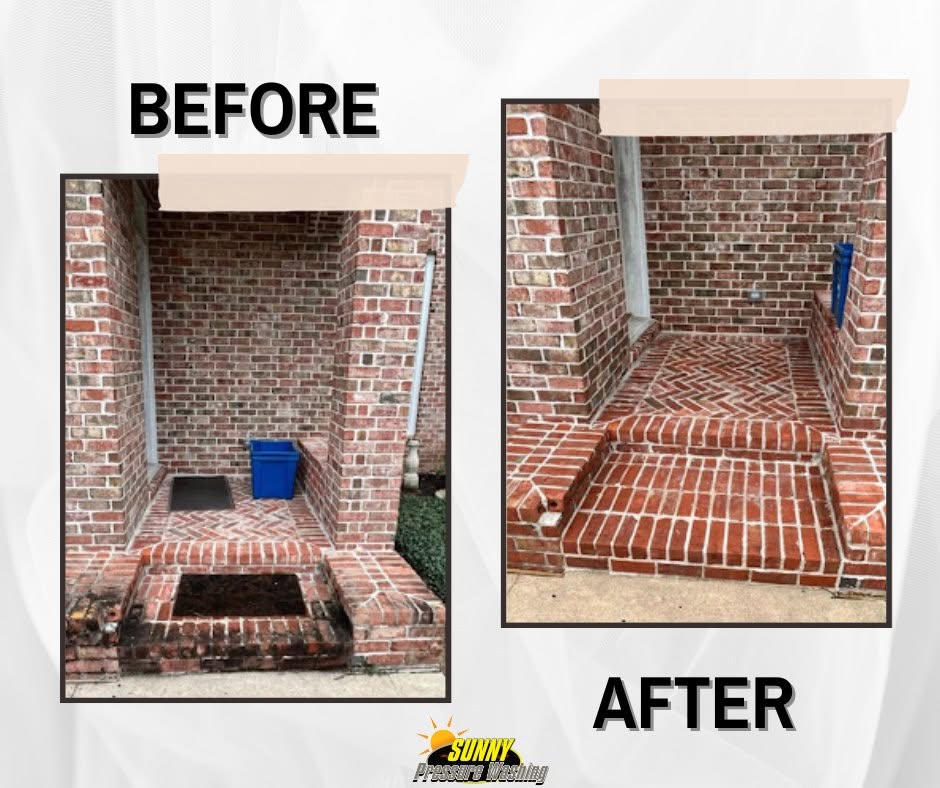
Sunny Pressure Washing helps Houston homeowners remove dirt, organic growth, stains, and other exterior buildup while protecting the surfaces underneath. Brick is durable, but that does not mean every brick wall should be blasted with high-pressure water. Our approach considers the brick’s age, surface finish, mortar condition, staining, and surrounding materials before cleaning begins. That attention is especially important in Houston, where frequent rainfall, warm temperatures, and long periods of moisture can leave exterior surfaces looking dirty and discolored. The goal is not simply to make brick look cleaner. It is to choose a cleaning process that delivers a noticeable improvement without unnecessarily stressing the masonry.
Is Pressure Washing Safe for Brick Homes?
Pressure washing can be safe for suitable brickwork when the correct equipment, cleaning products, pressure, and technique are used. The Brick Industry Association (BIA) states that pressurized water has been successfully used to clean brick, but it can cause irreparable damage to any type of brick when performed incorrectly.
That distinction matters. A brick wall that looks extremely strong can contain softer mortar, aging joints, cracks, surface coatings, or delicate brick finishes that require a gentler approach.
Before cleaning a brick house, professionals should consider factors such as:
- The age and condition of the brick
- Cracked, loose, or deteriorating mortar
- The brick’s texture or surface coating
- Existing paint, sealers, or other treatments
- The type and severity of staining
- Nearby windows, doors, landscaping, and exterior materials
The BIA recommends using the gentlest cleaning method that will effectively clean the masonry. Depending on the brick, that could mean hand cleaning, low-pressure or controlled pressurized water, or an appropriate masonry cleaning solution.
Can High-Pressure Washing Damage Brick and Mortar?
Yes. Too much pressure can damage brick finishes and mortar joints, particularly when the masonry is already deteriorated.
The BIA specifically warns that improper power washing can permanently damage brick. Acme Brick also cautions that certain high-pressure washing equipment can alter the appearance of brick.
Damage is not always immediately obvious. Aggressive cleaning may erode mortar, change the brick’s surface appearance, or drive water into vulnerable areas. That is why increasing pressure should not be the automatic response to a stubborn stain.
A safer process starts by inspecting the masonry and identifying what needs to be removed. The cleaning method can then be adjusted to the surface rather than treating every brick house the same way.
What Is the Best Way to Clean Exterior Brick?
For many brick homes, the best method is the least aggressive process capable of removing the unwanted buildup.
The BIA’s Technical Note 20 recommends selecting cleaning methods according to the specific brick category and consulting the brick manufacturer when possible. Its guidance allows pressurized water for many common brick categories but recommends hand cleaning instead for some sand-finished or surface-coated brick.
A professional brick cleaning process may include:
- Inspecting the masonry. Loose mortar, significant cracking, deteriorated brick, and other defects should be identified before washing.
- Testing the cleaning method. An inconspicuous test area helps determine how the brick and mortar will respond.
- Applying an appropriate cleaner when needed. Cleaning solutions can loosen organic buildup and stains so water pressure does not have to do all the work.
- Using controlled water pressure. Pressure, distance, spray pattern, and technique are adjusted for the particular masonry.
- Rinsing thoroughly. Residue should be removed without unnecessarily saturating vulnerable areas.
The BIA also advises against using unbuffered muriatic (hydrochloric) acid to clean brick because it can cause permanent staining or damage.
Why Do Brick Houses in Houston Need Exterior Cleaning?
Houston’s warm, wet climate can create favorable conditions for exterior staining and organic buildup.
According to the National Weather Service, Houston Intercontinental Airport’s 1991-2020 climate normals include about 51.84 inches of precipitation annually, with average high temperatures reaching roughly 95°F in August. That combination of warmth and moisture means exterior surfaces can spend significant periods exposed to conditions that support biological growth and accumulated grime.
Brick can collect:
- Dirt and atmospheric residue
- Algae and other organic growth
- Mildew-related discoloration
- Efflorescence and mineral deposits
- Splash-back stains near soil and landscaping
- Stains beneath gutters, rooflines, and drainage areas
Shaded walls and areas surrounded by dense vegetation may stay damp longer after rain. The BIA notes that vegetation touching brick can trap moisture against the façade and potentially contribute to mold or mildew growth.
Routine exterior cleaning can restore the appearance of the masonry while giving homeowners an opportunity to notice cracks, deteriorated mortar, drainage problems, or other maintenance concerns.
Should You Pressure Wash an Older Brick House?
Older brick requires extra caution. Before pressure washing, the condition of both the brick and mortar should be evaluated.
Mortar can deteriorate long before the brick itself appears seriously damaged. The BIA recommends repairing deteriorated, loose, missing, or significantly cracked mortar before certain masonry treatments and cleaning procedures. It also recommends using the least aggressive cleaning technique necessary.
Warning signs that deserve attention before washing include loose or crumbling mortar, visibly cracked bricks, flaking surfaces, previous masonry repairs, and areas where water already appears to be entering the wall.
For these homes, professional evaluation is particularly valuable. The safest cleaning method may use substantially less pressure than a homeowner expects.
Why Professional Brick House Washing Makes a Difference
The most important part of cleaning brick is not owning a powerful pressure washer. It is knowing when and how to use pressure.
Sunny Pressure Washing takes a surface-specific approach to exterior cleaning in Houston. Instead of relying on maximum pressure, the cleaning process can be adapted to the masonry and the type of buildup being removed.
Professional cleaning also reduces the guesswork surrounding nozzle selection, cleaning solutions, application techniques, and safe working distances. This matters because brick, mortar, windows, painted trim, landscaping, and other materials may all be present within a small section of the home’s exterior.
The objective is straightforward: remove unwanted buildup while preserving the brick home’s appearance and integrity.
Frequently Asked Questions About Pressure Washing Brick
Can you pressure wash old brick?
Some older brick can be cleaned with pressurized water, but the brick and mortar should be inspected first. Deteriorated masonry or delicate surface finishes may require a gentler cleaning method.
What PSI should you use to pressure wash brick?
There is no single PSI that is appropriate for every brick house. Brick type, surface finish, mortar condition, equipment, nozzle, distance, and cleaning method all affect what is safe, so professional guidance and a test area are preferable to relying on a universal pressure setting.
Can pressure washing remove algae and mildew from brick?
Proper exterior washing can remove many types of organic growth and discoloration from brick. Appropriate cleaning solutions can help break down the buildup so excessive water pressure is not required.
Is soft washing better than pressure washing for brick?
It depends on the masonry and the contaminant. Some brick can safely tolerate controlled pressurized water, while other surfaces benefit from a lower-pressure cleaning approach. The safest choice is the least aggressive method that effectively cleans the brick.
Ready to Clean Your Brick Home in Houston?
Your brick exterior should look clean without being subjected to unnecessary force. Sunny Pressure Washing can evaluate your home’s masonry and choose an appropriate cleaning approach based on its condition, surface type, and staining.
Ready to refresh your brick home’s exterior? Contact Sunny Pressure Washing today to learn more about professional brick house washing in Houston, TX.